How safe is it to invest in Forex? Market risks
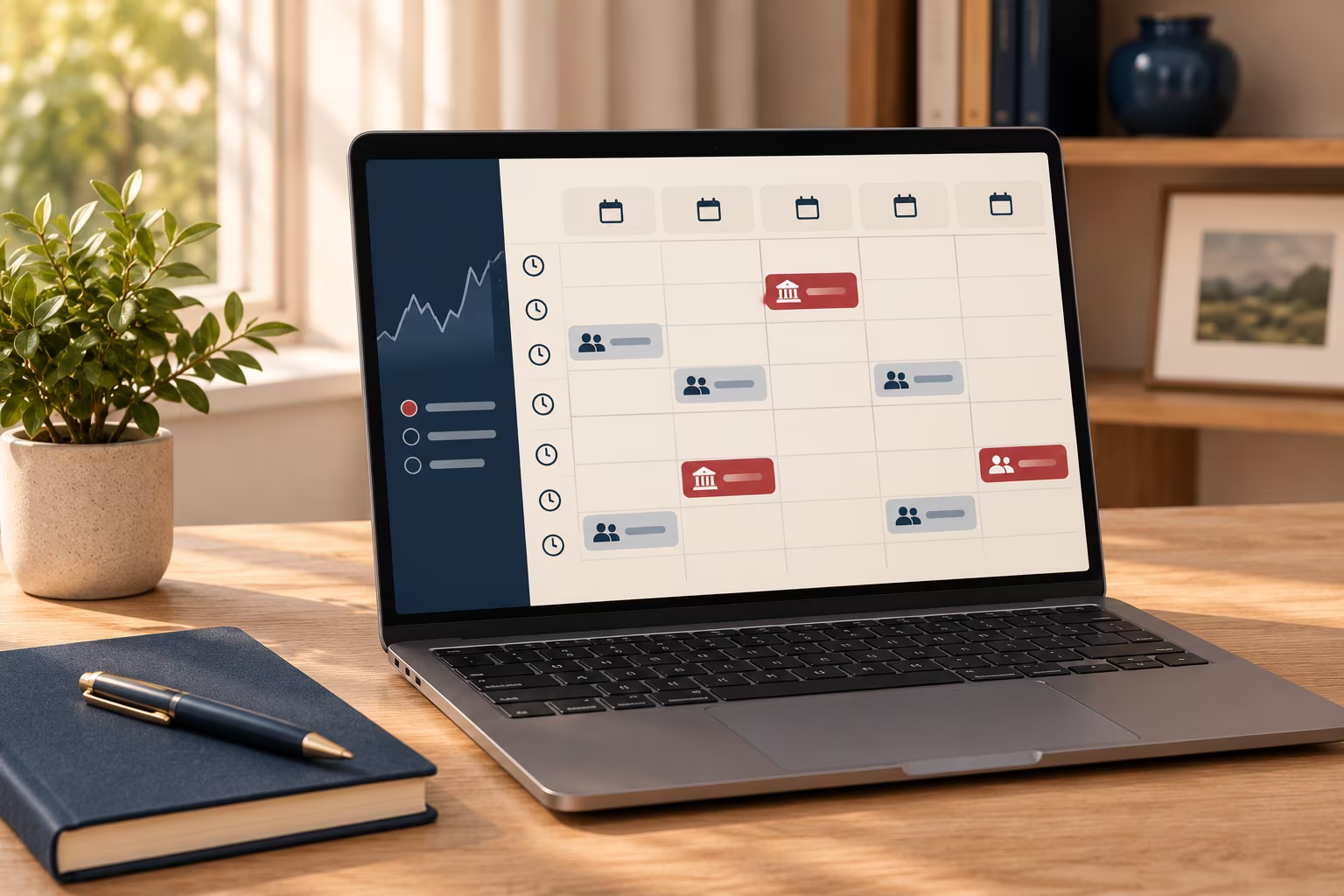
Investing in Forex is legal, but risky for an individual. Forex is the market where currencies, such as the euro or the dollar, are bought and sold, and their prices change at every moment.
The biggest danger for beginners is called leverage, a tool that makes gains and losses much larger than the money you put in. That is why the majority of individuals who trade in this market end up losing money. How safe it is to invest in Forex depends, above all, on how much you risk and which broker you use.
We explain what using an automated system adds in the risks of automated trading.
What is leverage, explained without technical jargon
To trade in Forex, you need a broker, which is the company that gives you access to the market. With a broker, an individual almost never buys actual currency. Instead, you open a trade that makes a profit if the price of one currency against another rises, or falls, depending on what you have chosen. These products are called CFDs, or contracts for difference.
Leverage works like a multiplier. You put in an amount, called margin, and the broker lets you trade as if you had much more. In Europe, an individual may be allowed to trade with up to 30 times their money on major currencies, which is written as 30:1.
An example with round numbers:
- You put in €500. With 30:1 leverage, you trade as if you had €15,000.
- The price moves slightly against you. A 0.5% move, which can happen in a short time. On €15,000, that is €75.
- Those €75 come out of your €500. You have lost 15% of your money with an almost imperceptible movement.
- If the price continues to move against you. With a move of just over 3%, you would lose the entire €500. To avoid reaching that point, the broker automatically closes the trade once you have lost half of your margin.
With the price in your favor, the profit is also multiplied. The problem is that a few bad trades can empty your account very quickly. No one forces you to use all the available leverage, and the smaller each trade is in relation to your capital, the less each movement affects you.
What causes a currency price to change suddenly
There are situations that move the price sharply and that no one can predict with certainty:
- Central bank decisions. Institutions like the European Central Bank set interest rates, and an unexpected change can move the price in seconds.
- Economic news. Employment or inflation data are released at set times and often trigger price jumps.
- The weekend. The market is closed from Friday night until Sunday night. If something significant happens during that time, the price may reopen far from where it was, and a trade could close with a greater loss than you had anticipated.
- Quiet hours. There are fewer people trading in the early morning, and the spread between the buy and sell price widens. Trading at these times is more expensive.
Keeping a trade open overnight also incurs a small cost, or sometimes a small gain, called a swap. It depends on the interest rates of the two currencies.
How many retail traders lose money in Forex
In the European Union, brokers are required to disclose what percentage of their retail clients lose money. It is a statement with a percentage that you will see on their website, in their ads, and during the sign-up process. In industry terminology, individual traders are referred to as retail clients.
According to the CNMV, the body that oversees these markets in Spain, between seven and nine out of every ten retail traders who trade CFDs lose money.
When you see that warning, keep three things in mind:
- The figure comes from the broker itself. It is calculated based on their clients from the last twelve months and is updated every three months.
- It aggregates everything. It includes trades involving currencies, gold, or stock indices, and combines clients who trade daily with others who only tried it once.
- A slightly lower percentage guarantees nothing. It reflects how that broker's clients trade and says little about the quality of the company.
What you can control and what you cannot
There are risks that no one can remove for you and others that depend solely on you:
This loss limit is called a stop loss. It is an order that automatically closes the trade if the loss reaches the amount you decided. Its counterpart is the take profit, which closes the trade when it reaches the gain you were looking for.
At Boosty, two of those decisions are governed by fixed rules. Each trade is opened with a predefined stop-loss and take-profit target, and the position size is calculated so that, if it goes wrong, you lose about 1% of your account balance.
With €1,000 in your account, that’s about €10 per trade. Even so, ten bad trades in a row would leave your account down nearly 10%. Such losing streaks can happen, and Boosty does not refund losses when they occur. You decide how much money to deposit.
The risk of the company holding your money
Beyond the risk of the market moving against you, the company itself could fail. With a broker authorized in the European Union, you have three protections:
- Your money is kept separate. It is held apart from the company's own funds.
- You cannot lose more than you have deposited. Your account balance will never drop below zero.
- There is a guarantee fund. If the company goes bankrupt, a fund will reimburse your balance up to a certain limit.
With an unauthorized company, the danger is that you may not recover your money, even if your trades were successful. We cover how to spot a fake broker in our guide to detecting Forex trading scams, and we summarize what the law requires of each company in our overview of Spanish Forex regulations.
What determines how safe it is to invest in Forex
- Leverage multiplies both gains and losses, meaning a small market movement can cost you a significant portion of your capital.
- News events, price gaps, and quiet market hours are beyond your control. How much you risk on each trade and how much money you deposit, however, are up to you.
- An authorized broker protects your money if the company goes bankrupt, though it does not protect you from market losses.
Latest insights and trends
How safe is it to invest in Forex? Market risks
How to spot a Forex trading scam
How to use AI for trading without technical knowledge
What is a trading bot? Definition and how it works
Is automated trading safe? Risks and limitations
AI trading and IA trading: the same concept in two languages
How to read trading bot reviews
Bots para Forex: cómo operan en el mercado de divisas
Automated trading: what it is and what it isn't

How to build a trading bot and why almost no one succeeds
Automated trading systems explained from scratch

Free trading bots: what's behind the zero-cost price tag


Ready to transform your trading?