Is Forex legal in Spain? What the regulations say
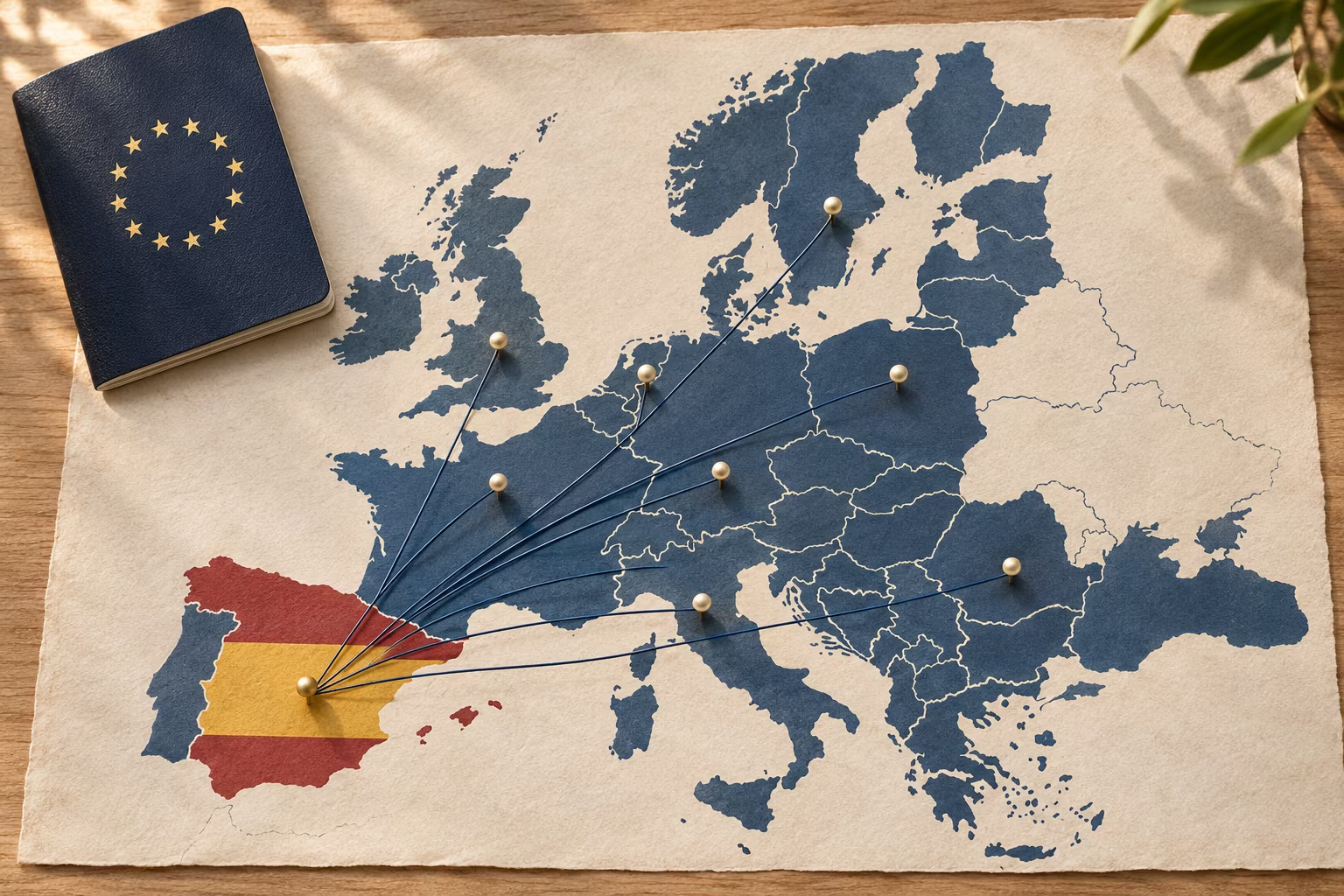
Yes, Forex is legal in Spain. Trading currencies, or products that track their price, is permitted as long as you do so through an entity authorized to provide investment services to Spanish clients. The law regulates who can offer you these products and under what conditions, which is where your protection comes from. With an unauthorized company, you are left without almost all the guarantees provided by the regulations.
What the law does not cover are market losses. We analyze that risk, along with the risks added by automating trades, in our section on the risks of automated trading.
Who supervises Forex in Spain
Companies that provide investment services in Spain are under the supervision of the National Securities Market Commission (CNMV). In practice, an individual almost never buys spot currencies for speculation. They trade contracts for difference (CFDs) or other derivatives on currency pairs, which is why the rules that apply to them are those governing these products.
Three types of entities can offer you these products:
- Authorized Spanish companies. Securities firms and agencies, as well as banks, registered in the official CNMV registry.
- Companies from other countries in the European Economic Area. They are authorized by their home country's regulator and can operate in Spain using the so-called European passport, after notifying the CNMV. They also appear in their registries.
- Companies from outside the European Economic Area with authorization in Spain. Without it, they cannot solicit clients here, and those that try usually end up on the CNMV's warning list.
Limits that protect retail clients
Since 2018, European regulations have set the amount of leverage an authorized broker can offer a retail client. In Spain, the CNMV has maintained these measures since 2019. The limit depends on the asset:
Along with these limits, the same regulations impose four other protections:
- Automatic position closing. If the account margin falls to 50% of the required minimum, the broker closes open trades.
- Negative balance protection. Losses are capped at the amount of money deposited, and the broker cannot demand an additional amount from you.
- No trading incentives. Bonuses and gifts linked to opening trades are restricted.
- Standardized risk warning. Every broker displays the percentage of their retail accounts that lose money.
These protections are for retail clients. A client who requests to be treated as a professional can access more leverage, but they waive a significant portion of these protections, and this is only granted if they meet requirements regarding net worth, trading volume, or experience in the financial sector. If a broker encourages you to change your category to trade with more leverage, it is wise to think twice.
What the CNMV added in 2023
In July 2023, the CNMV went beyond European measures. It banned CFD advertising aimed at retail clients, the sponsorship of events, and the use of celebrities to promote them. It also restricted the compensation of sales staff when it depends on the number of clients acquired or their losses.
The reason lies in their own data. According to the CNMV, between 70% and 90% of clients who trade CFDs in Spain lose money, and in 2021, about 60,000 clients accumulated losses of 70 million euros.
A practical consequence is that a CFD ad featuring a celebrity and directed at you as an individual is already a cause for suspicion. We explain what to check when faced with such an offer in our signs that reveal a Forex scam.
What changes if the broker is outside the European Union?
The location where the broker is authorized determines which rules protect you:
The guarantee fund responds if the entity goes bankrupt and cannot return the money or securities held in your name. It does not cover losses due to market movements.
All brokers that Boosty works with are regulated and meet the required legal standards. Checking the authorization of any broker before opening an account is still a step that is up to you, and it only takes a few minutes on the CNMV website.
Using a trading bot is also legal
No Spanish regulation prohibits automating your trades. What is regulated is the entity that holds your money and executes the orders, and that does not change because a program opens them.
However, there are two nuances:
- The broker's obligations remain the same. Leverage limits, automatic closing, and risk warnings apply equally to a trade opened by a bot.
- The decisions remain your responsibility. Who is the account holder, how much capital you invest, and when you disconnect the system are not covered by any regulation for you.
Taxes are also part of what is legal
Gains obtained from Forex are reported in your personal income tax return, just as if you had achieved them by trading manually. Losses are also reported and, within certain limits, can be offset against gains. We explain how to do this step-by-step in our guide to reporting trading on your income tax return.
Forex is legal in Spain with an authorized broker
- Forex trading is legal if the entity is registered with the CNMV or authorized in another European country with a passport.
- As a retail client, you are subject to leverage limits, automatic close-out, negative balance protection, and a risk warning stating the percentage of accounts that lose money.
- Outside the European Union, these protections depend on the country, and the European guarantee fund no longer applies.
Latest insights and trends
How safe is it to invest in Forex? Market risks
How to spot a Forex trading scam
How to use AI for trading without technical knowledge

What is a trading bot? Definition and how it works
Is automated trading safe? Risks and limitations

AI trading and IA trading: the same concept in two languages
How to read trading bot reviews

Bots para Forex: cómo operan en el mercado de divisas

Automated trading: what it is and what it isn't

How to build a trading bot and why almost no one succeeds
Automated trading systems explained from scratch

Free trading bots: what's behind the zero-cost price tag


Ready to transform your trading?